Safe locksmith
A safe that is not bolted down is a strongbox with a handle for carrying it away.
The single most common weakness we find is not the lock, the door or the steel. It is that the whole thing is standing on a shelf. A safe defeats an intruder by being impossible to open in the time available — and none of that applies if the sensible move is simply to pick it up, put it in a car, and open it somewhere with better tools and no interruptions.
What you can expect
- 24/7 emergency response
- Mobile units across Cape Town
- Residential, commercial & automotive
- Transparent pricing
- Trusted by Cape Town locals
Where it is fixed matters more than what it cost
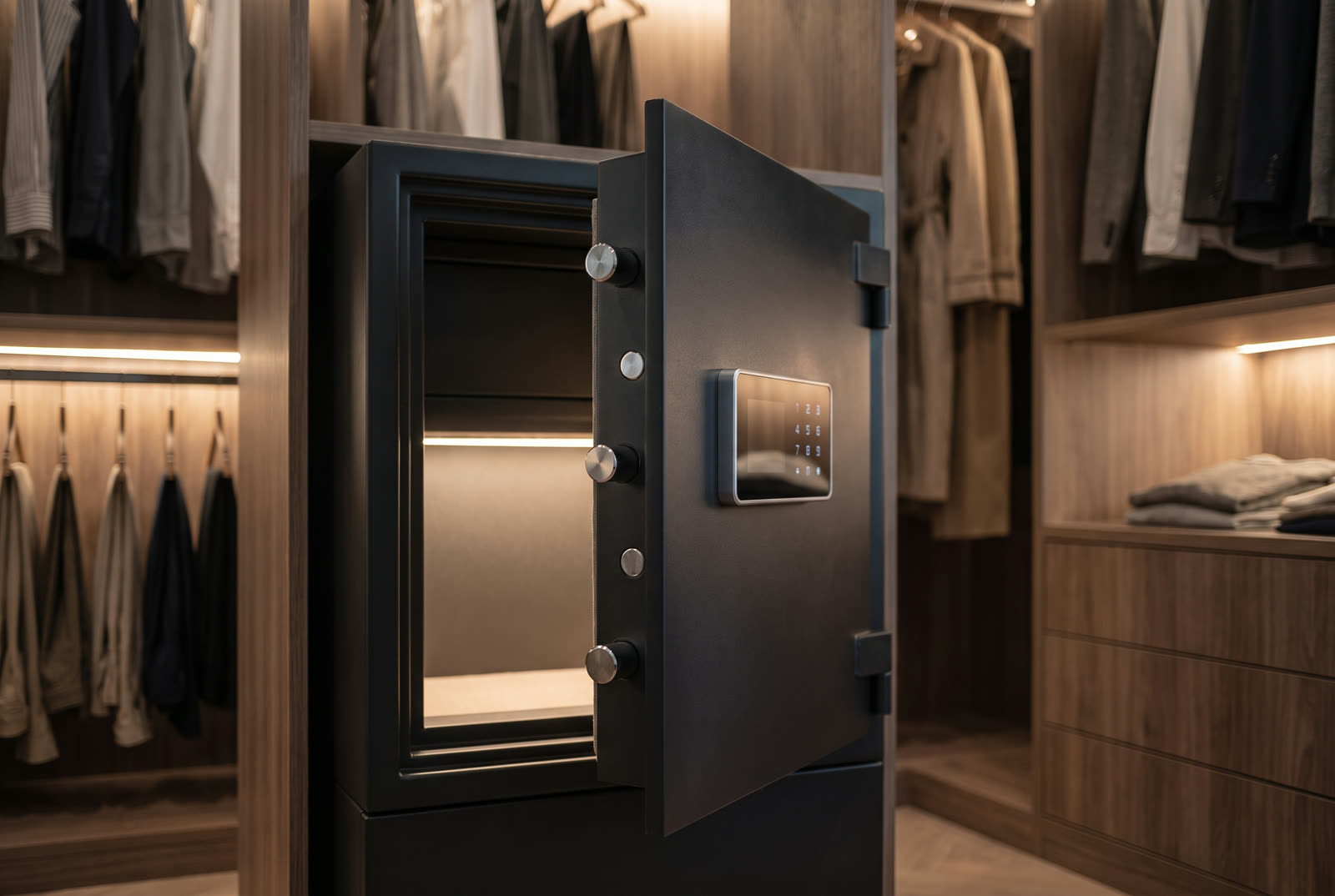
Safes are rated against attack for a defined period, and every one of those ratings assumes the unit stays where it is. Remove that assumption and the rating stops describing anything useful, because an unhurried attack in a private location has no time limit at all. A modest safe properly anchored into a concrete floor is a considerably better proposition than an expensive one resting on a cupboard shelf.
The fixing is therefore the first thing worth checking on any existing installation, and the first thing worth specifying on a new one. Most safes are supplied with anchor points for exactly this purpose, and a surprising number are never used because installation was left to whoever delivered it. Concrete is ideal; a solid wall is workable; a timber floor or a shelf is, in practical terms, no anchoring at all. Getting that right is the same discipline as proper lock installation on a door — the fixing into the structure decides far more than the item bolted to it.
Location matters alongside that. A safe in a room nobody would think to look in, out of sight of windows, buys far more than a heavier door in an obvious place. That is the same judgement a sensible residential locksmith walk-round applies to a house, and it costs nothing to get right at the point of installation rather than afterwards. It is the same reasoning that runs through security lock upgrades on a house — the effort belongs where an unhurried attempt would actually happen, not where it feels reassuring.
Six reasons somebody calls about a safe
Only two of these are emergencies. The rest are much better handled calmly.
A combination nobody knows
Inherited, forgotten, or held by somebody who has left. Very often recoverable.
Commercial locksmithA safe that has locked itself
Where a mechanism, a battery or a relocker has done its job at the worst moment.
Emergency locksmithA business that cannot bank
Cash, float and takings shut behind a door that stopped a trading day cold.
Business lockoutA safe that is getting stiff
Bolts dragging, a dial that has drifted, or a lock overdue for attention.
Lock repairAn inherited or second-hand unit
Where nobody knows the history and the existing combination should not be trusted.
Lock change servicesFitting or relocating one
Where anchoring and position decide whether the purchase was worth making at all.
Lock installationSafe that will not open?
Tell us the make, roughly how old it is, whether it is dial or electronic, and whether it is bolted down. That shapes the approach entirely.
Slower than people expect, and usually without damage
Safe opening is patient work, and rushing it is how a repairable unit becomes scrap.
The preferred outcome is always that the safe opens and remains a working safe afterwards. That is frequently achievable — a great many lockouts come down to a mechanism that has drifted, a flat battery on an electronic lock, a combination that is nearly right, or bolts binding because the unit has settled. None of those require anything destructive, and all of them take time rather than force.
Where an opening does have to be destructive, the goal shifts to doing the least irreversible damage possible and keeping the unit repairable. Safes are built specifically to resist this, often including relocking devices that trigger under attack and make matters considerably worse if provoked carelessly. That is why patient method matters more here than on any door, and why a rushed approach can turn a recoverable safe into something only a scrapyard wants.
Expect it to take longer than a door and expect to be asked more questions first — make, approximate age, dial or electronic, and whether anything has already been attempted. Previous attempts matter enormously, because they change the internal state. If you would like to see who covers your area first, our emergency locksmith near you page sets it out and the wider service overview covers everything else.
What safe work covers
Opening, servicing, changing combinations, and getting the installation right.
- Safes opened where a combination has been lost or a mechanism has failed.
- Electronic locks diagnosed, with batteries ruled out before anything else.
- Dial mechanisms serviced where drift or wear has made them unreliable.
- Combinations changed on inherited, second-hand or staff-turnover units.
- Bolt work and hinges serviced where a door has become stiff to operate.
- Anchoring assessed and corrected, which is usually the real weakness.
- Safes relocated and re-fixed properly rather than simply moved.
- Entitlement established before anything is opened, without exception.
Two things worth ruling out, and one thing not to do
On an electronic lock, the battery is the first suspect and by a wide margin the most common cause. Many units give little or no warning, and a great many safe lockouts end with a fresh battery and an embarrassed phone call. It is worth establishing where the battery compartment is on your own safe before you ever need to, because on some designs it is not obvious.
On a dial lock, the second thing to rule out is technique rather than fault. Dial mechanisms are unforgiving about direction, the number of turns, and overshooting a number — and a combination entered slightly wrongly behaves exactly like a combination that is wrong. Trying it slowly and deliberately a few times, exactly as written, resolves a genuine share of these. If the safe forms part of a business's cash handling, it is also worth checking who else was ever given the combination, since that is a commercial locksmith question rather than a mechanical one and it tends to surface at the same moment.
The thing not to do is force it, and this matters more on a safe than anywhere else. Levering, drilling on a guess, or attacking a dial can trigger a relocking device designed specifically to punish that, at which point a straightforward opening becomes a much longer and more expensive one. If somebody has already tried, say so on the phone — it is not a judgement, it is information that changes the method.
Identify, verify entitlement, rule out the simple, then open
More questions up front than any other job in this trade, for good reason.
- 01
Identify the unit
Make, approximate age, dial or electronic, and whether anything has been attempted.
- 02
Entitlement established
Ownership of the safe and of the premises, before anything is opened. Never skipped.
- 03
Rule out the simple causes
Battery, technique, binding bolts. A useful share of lockouts end right here.
- 04
Opened patiently
Non-destructively wherever possible, and repairably where it cannot be.
A flat battery, an inherited safe, and one that was never bolted down
Three safe calls, only one of which needed anything difficult.
The cheapest call-out of the week
An electronic safe completely unresponsive, in a household convinced the lock had failed and braced for a difficult and expensive opening.
Flat battery, with no meaningful warning beforehand — which is normal on a good many units. Worth knowing where your own battery compartment is before the day it matters, because on some designs it is genuinely not obvious.
Nobody alive knew the number
A dial safe inherited with a property, standing in a garage, with no documentation and no living person who had ever opened it.
Opened non-destructively over a patient session and left as a fully working safe with a fresh combination. The contents, as is very often the case with inherited safes, were of no value to anybody at all.
Carried away entirely
A business asked about upgrading to a heavier safe after a burglary in which the previous one was taken.
It had never been bolted down, so its rating had been irrelevant from the day it arrived. A modest unit properly anchored into the floor was a better answer than an expensive one standing loose, and considerably cheaper.
Inherited or second-hand safes
If you did not set the combination yourself, you do not know who else has it — a previous owner, their family, or whoever sold it to you.
Changing it is quick, inexpensive and the obvious first thing to do with any unit that arrives with a history you cannot account for — the same logic that makes a lock change worthwhile after a property transfer.
Businesses and cash handling
A safe that will not open stops banking, float and often trading itself, which puts it in a different category from most locked doors.
It also warrants a proper authority check, since what is behind the door is usually money belonging to somebody other than whoever is standing there — the same standard applied on any commercial lock change.
Safe locksmith
Safe opening, repair and installation across Cape Town.
Whether you've forgotten the combination, inherited a safe with no code, run into a dead electronic keypad or want to fit a new safe properly, our safe specialists work on site, discreetly, and without unnecessary damage.
What you can expect
- 24/7 emergency response
- Mobile units across Cape Town
- Residential, commercial & automotive
- Transparent pricing
- Trusted by Cape Town locals
The kinds of safe jobs we handle
Safes break, get forgotten, get inherited, get bumped during renovation, and occasionally get attacked. We see all of it. The most common call is a perfectly healthy safe that simply hasn't been opened in years — the combination has been lost or the digital keypad has died with no override key on hand. Those are usually our quickest jobs and almost always end with the safe still fully usable.
Home, office and retail safes
Home safes are usually about documents, jewellery and firearms — pieces of value where theft risk and quick access both matter. Office safes are more often about petty cash, confidential records and key registers. Retail safes are working machines: opened multiple times a day, drop-slotted overnight, expected to take some abuse. The right safe and the right lock for each role is a different conversation, and we'll have it with you honestly before any purchase.
Mechanical and electronic safes
Mechanical dial safes are still common, especially older home and gun safes, and a skilled safe technician can often manipulate them open without any damage at all. Electronic safes are more variable — many have a key override or service mode that avoids drilling; others need keypad or board replacement; a few stubborn models do require drilling to a precise known point, after which we re-plug and re-secure the unit. Whatever route the safe needs, we explain it before starting and quote both the opening and any restoration work in one number.
New safe installation
A safe is only as secure as its installation. A bolt-down kit ignored, a wall safe set into plaster instead of brick, a heavy floor safe simply sitting on the carpet — these mistakes are everywhere, and they undo the rating you paid for. We size the right safe for what's actually going in it, fit it to a structurally sound surface, and program the initial combination with you on site.
Across Cape Town
Safe jobs run across the metro — homes in Constantia, Newlands, Sea Point and Camps Bay; offices in the CBD, Foreshore and Century City; and retail across the major shopping precincts. Safe specialists are deployed on appointment, since most of the work is planned rather than emergency.
Pair with broader security work
Safe calls often turn into a wider conversation about access at the property. If you've inherited a safe with an unknown combination, there's a good chance the rest of the property still has unknown keys floating somewhere too. Pair a safe re-key with a lock change or an upgrade and you'll know exactly who can access what going forward.
Services that often pair with safe work
- Lock Change ServicesModern, high-security lock replacements for homes, businesses and estates.
- Security Lock UpgradesUpgrade older locks to modern high-security hardware.
- High Security LocksPick-resistant, drill-resistant locks for serious security.
- Commercial Lock ChangePlan and execute lock changes across business premises.
- Residential LocksmithHome locksmiths trusted across Cape Town suburbs — lockouts, repairs, upgrades, installations.
- Commercial LocksmithBusiness security specialists — master key systems, high-security locks, access control.
Safe specialists across Cape Town
- Cape Town City CentreInner-city locksmith service across the CBD.
- ConstantiaLocksmith service across Constantia's estates and homes.
- Sea PointLocksmith service across Sea Point's residential blocks.
- Camps BayPremium residential locksmith service in Camps Bay.
- Century CityLocksmith service across Century City's apartments and offices.
- RondeboschLocksmith service across Rondebosch's homes and student housing.
FAQ
Protecting what matters inside the safe
Safe work is never only about getting the door open. The real job is protecting the safe contents, preserving the body and lockwork, and leaving the safe security intact so it can be used again with confidence. A careful safe locksmith Cape Town clients can trust will choose non-destructive opening methods wherever possible, because drilling, prying or aggressive forcing can turn a manageable fault into a costly replacement. That matters when the safe holds passports, contracts, cash, jewellery, firearms records or other items that cannot be easily replaced, and it matters just as much when the safe is built into a wall or floor and must remain structurally sound after the callout.
Good safe repair is just as important after access is gained. A jammed bolt, worn hinge, damaged handle or faulty combination mechanism can leave a safe technically open but no longer secure.
If the issue is not corrected properly, the same fault may return, or the door may not seal tightly enough to protect against tampering and dust. In some cases, safe installation problems are part of the risk too: a unit that was fitted badly can strain the frame, weaken the anchoring, or make later access more difficult than it should be. Professional attention brings those details back under control. In Cape Town, the aim is simple: open the safe with the least disruption, repair what failed, and restore dependable locking performance before the job is considered complete. That is how safe opening, safe repair and safe installation work together as a security service rather than a break-in disguised as a fix. It keeps the safe usable, the contents protected, and the owner in charge of access again.
Where safe work stops being a standard locksmith job
A good safe technician does not treat every locked door the same way. If a safe is not opening, the right response depends on the fault, the build of the unit, and what is inside it. Some cases can be handled on site with controlled safe opening or careful safe repair, while others need a more conservative approach because the mechanism is seized, the body has been damaged, or the lock has already been compromised. Electronic safe fault reports can sometimes be resolved without forcing the door, but a mechanical safe fault may point to worn parts, misalignment, or a failed locking component that needs workshop-level attention. The aim is always to preserve safe contents protection first, then assess whether the safe can be returned to service or whether a replacement safe installation will be the better outcome.
In Cape Town, that judgment matters because rushed attempts can turn a manageable fault into a permanent one. A safe locksmith should be clear about what can be done safely, what may need specialist handling, and when a particular unit is beyond economical repair. The same practical restraint applies outside safes too: a car locksmith is the right call for vehicle access, while a locksmith in V And A Waterfront or a locksmith in Montague Gardens may deal with everyday lock issues that are very different from safe mechanisms. For safe owners, the useful question is not only whether the door can be opened, but whether the work can be completed without making the safe less secure, less reliable, or harder to service later.
Choosing the right safe service for the fault in front of you
The right call usually comes down to what the safe is doing, not just whether it is locked. If the door is shut but the mechanism is intact, safe opening may be enough. If the handle feels loose, the boltwork drags, the hinges bind, or the dial and keypad respond but the door still will not move, a safe repair is often the better answer because the fault is mechanical rather than access-related. A locked safe with a lost code, a jammed latch, or a safe door not opening after a keypad failure can point to different work for a safe technician, and getting that distinction right saves time and avoids unnecessary damage. Sometimes the decision is about control, not access. When a safe has been moved, inherited, or taken over after staff changes, safe rekeying may be the sensible option so the existing hardware can stay in service without relying on an old code or uncertain history.
When the body is cracked, the lockwork is outdated beyond sensible rebuilding, or the door no longer seals properly, safe replacement can be the most practical route. A new safe installation then gives you a clean starting point with the right size, fixing method, and placement for the space.
For Cape Town property owners, the best answer is often site-specific. A locksmith in Gardens may be dealing with a compact home safe hidden in cabinetry, while a locksmith in Camps Bay might be assessing a larger unit in a residence where appearance matters as much as access. A locksmith in Parklands may be asked to restore a family safe that has simply aged out of dependable use. A good safe locksmith Cape Town clients can rely on will explain which option fits the fault, the age of the safe, and the value of keeping the original unit in service.
Matching the fault to the right safe service
The quickest way to decide what you need is to look at the symptom, then the condition of the safe itself. If the safe is not opening because the code is forgotten, the keypad is unresponsive, the dial feels abnormal, or the boltwork is stuck after wear or a bump, the first step is usually safe opening Cape Town style: careful assessment, then controlled access based on the fault. If the door is already open but the lock keeps binding, the bolts drag, or the body has taken a knock, safe repair may be enough to restore reliable use without replacing the unit. When a safe is badly positioned, undersized for the space, or being fitted into a new home or office, safe installation is the better fit, because the real issue is not access but getting the safe set up correctly from the start.
A safe locksmith should also judge whether the lock fault is isolated or part of wider deterioration, because that changes whether rebuilding, adjustment, or safe replacement makes sense. For a residential locksmith, the call is often about a home safe that needs discreet opening before documents, jewellery, or firearms can be reached safely again. A commercial locksmith is more likely to see safes that must return to service quickly because they hold cash, records, or stock. And if you are comparing options with a locksmith in Newlands, the same rule applies: do not ask only for “opening” or “repair” until the fault has been identified, because the right service depends on whether the safe is locked out, mechanically damaged, or simply ready for a new installation.
Understanding the Cost of Safe Locksmith Services in Cape Town
When you require a safe locksmith in Cape Town, one of the first questions you might have is about the cost involved. Pricing for safe opening, repair, and installation services isn't a one-size-fits-all figure, as it depends on several key factors. For a safe opening, the complexity often dictates the safe locksmith cost. If it's a simple case of a forgotten combination for a standard mechanical safe, the process is usually quicker and less involved than dealing with a high-security electronic safe with a drilling-resistant mechanism. The safe repair price will similarly vary based on the extent of the damage or the specific component that needs replacing. A minor recalibration of an internal mechanism is a different proposition than rebuilding a severely damaged lock after an attempted break-in.
For new safe installation, the cost depends on the safe's size, weight, and the type of installation required – for example, bolting a floor safe versus integrating a wall safe. Our Cape Town Locksmith team provides transparent pricing, ensuring you understand the factors contributing to the final locksmith safe charges. Emergency Locksmith Cape Town services for urgent safe access may incur a call-out fee, especially outside standard hours, reflecting the immediate dispatch and specialised tools required. We always aim to provide a clear estimate upfront, once we understand the specifics of your situation. Whether you need a local Cape Town Locksmith for a routine service or an urgent intervention, we focus on delivering value through expertise, minimising potential damage, and ensuring the long-term security of your safe.
Why safe faults need their own diagnosis
A safe locksmith in Cape Town is not just dealing with a stubborn lock; they are reading a whole access system that can fail in different ways. A safe access problem may come from a worn boltwork, a misaligned door, a damaged relocker, a spinning dial, a keypad that is sending power but no valid signal, or a lock fault that is hiding a structural issue behind the faceplate. That is why safe opening cannot be approached like an ordinary door lock. The technician first has to decide whether the barrier is in the lock, the movement of the bolts, the hinge side, the mounting, or the safe body itself before any safe opening method is chosen. In Cape Town, that judgment matters because the wrong assumption can turn a manageable safe lock fault into a bigger repair than necessary.
A skilled local Cape Town Locksmith will test how the door behaves, listen for internal movement, check whether the lock is actually engaging, and determine whether the correct service is safe repair, safe installation follow-up, or a controlled opening that leaves the unit serviceable. The same careful diagnosis also helps when a safe seems “broken” but is really suffering from poor alignment after a move, wear in the mechanism, or a previous bad repair. Choosing the right locksmith Cape Town customers can trust means getting someone who understands the difference between a lock that is jammed, a safe that is out of adjustment, and a unit that needs more than force. That is the standard for safe locksmith work here: identify the real fault first, then open, repair, or install with the right method for the safe in front of you.
What a qualified safe technician looks for before touching the lock
When you call a safe locksmith Cape Town customers trust, the first sign of competence is restraint. A proper safe technician does not rush straight into drilling, forcing, or guessing. They start by checking the safe body, hinges, bolts, relocking devices, door pressure, and the condition of the lock or keypad so they can choose the least invasive route for safe opening, safe repair, or safe installation work. That matters because damage-free safe work is not a slogan; it is the difference between keeping access controlled and turning a usable safe into a costly rebuild.
A skilled Cape Town locksmith should also be comfortable explaining why a method is being used, what risks come with it, and what will happen if the mechanism is already failing.
On site, that usually means testing alignment, listening for internal movement, and confirming whether the problem is the lock, the boltwork, or the way the safe has been fitted. If the safe has been installed badly, even a simple access issue can become a door-binding problem, so the right safe technician will address the cause rather than force the result. For the customer, that level of care protects more than the safe itself. It protects the contents, the finish, and the security of the room or office where the unit sits. Whether the job is safe opening, safe repair, or a fresh safe installation, the right Locksmith in Cape Town works with discretion, controlled methods, and a clear plan for safe access. That is the standard you should expect from a local Cape Town Locksmith before you let anyone near a secure container.
Related services
- Commercial LocksmithBusiness security specialists — master key systems, high-security locks, access control.
- High Security LocksPick-resistant, drill-resistant locks for serious security.
- Lock InstallationProfessional installation of deadbolts, mortice locks and smart locks.
- Business LockoutOffice and shop lockouts handled discreetly and quickly.
- Lock RepairWe repair sticking, broken and worn locks instead of replacing them.
- Master Key SystemsSingle-key access across multiple doors for offices and complexes.
Safe work across Cape Town
- Cape Town City CentreInner-city locksmith service across the CBD.
- ClaremontLocksmith service across Claremont's homes and retail.
- ConstantiaLocksmith service across Constantia's estates and homes.
- BellvilleBellville residential and commercial locksmith service.
- Century CityLocksmith service across Century City's apartments and offices.
- Somerset WestLocksmith service across Somerset West's estates and town centre.
Frequently asked questions
Quick answers to what Cape Town residents and businesses ask us most. Need something not covered here? Reach out — a real locksmith will help.
On an electronic lock, the battery — it is by a wide margin the most common cause and many units give little warning before failing. On a dial lock, technique: dials are unforgiving about direction, turn counts and overshooting, and a combination entered slightly wrongly behaves exactly like a wrong combination. Trying it slowly and deliberately resolves a real share of these.
Usually not. A great many lockouts come down to a drifted mechanism, a flat battery, a nearly-right combination or bolts binding as the unit settles, and none of those need anything destructive. Where an opening does have to be destructive, the aim is the least irreversible damage possible so the safe remains repairable rather than becoming scrap.
Because safes are specifically built to resist exactly what is being attempted, often including relocking devices that trigger under careless attack and make everything considerably worse. Patience is the method rather than a shortcoming of it. Anybody promising a safe opening in the same timeframe as a front door is describing something other than a real safe.
Yes, a great deal, and please say so on the phone. Previous attempts change the internal state — a triggered relocker, a damaged dial or a partially drilled door all alter what has to happen next. It is not a judgement about anybody; it is information that materially changes the method, the time and the likely outcome.
That the safe is not bolted down. Attack ratings assume the unit stays where it is; remove that and the rating describes nothing, because an unhurried attempt somewhere private has no time limit. A modest safe anchored into concrete is a far better proposition than an expensive one standing on a cupboard shelf.
Change the combination, and do it before you put anything in it. If you did not set the number yourself, you have no way of knowing who else has it — a previous owner, their relatives, or whoever sold it on. It is a quick, inexpensive job and it is the obvious first step with any unit whose history you cannot account for.
Always, and rather more thoroughly than on a door. Opening a safe is opening whatever somebody chose to protect most carefully, so ownership of both the unit and the premises is established before anything begins. Where a business is involved, that check matters even more, because the contents usually belong to somebody other than whoever is standing there. It occasionally means a job waits on a phone call to a director or an owner, which is the correct amount of friction for what is being opened.
Yes, and the important half is what happens at the other end. A safe that is relocated and simply set down has lost whatever protection its fixing gave it, which is often most of the protection it had. Re-anchoring it properly at the new location — into concrete where possible — is the part of the job that actually matters.
Yes, and the fitting is the half that decides whether the purchase was worthwhile. That means choosing a position out of sight and away from windows, then anchoring properly into concrete where the structure allows it. A safe delivered and set down on a floor has none of the protection its rating implies, and correcting that afterwards costs considerably less than replacing what was in it.
Need a safe opened or serviced in Cape Town?
Opened patiently and non-destructively wherever possible, combinations changed, and the anchoring checked while we are there.