Security lock upgrades
Most upgrade budgets get spent on the door nobody was ever going to use.
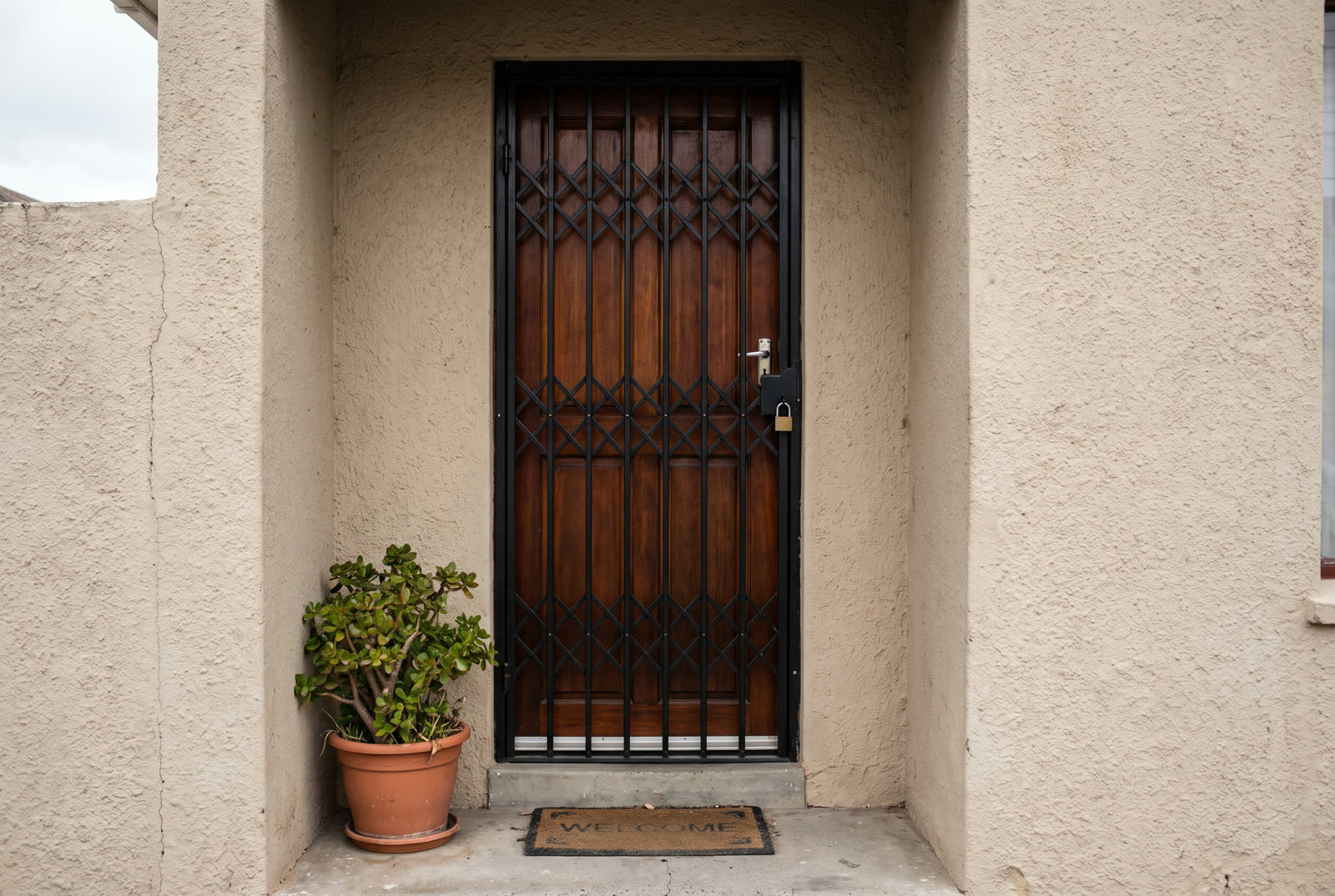
There is a strong instinct to fortify the front door, because that is the one you look at every day and the one that feels symbolic. It is also, on a great many Cape Town properties, among the least likely points of entry — overlooked from the street, in view of neighbours, and already the best-defended thing on the plot. Meanwhile the garage side door carries whatever the builder had spare.
What you can expect
- 24/7 emergency response
- Mobile units across Cape Town
- Residential, commercial & automotive
- Transparent pricing
- Trusted by Cape Town locals
You cannot prioritise entrances you have not listed
Ask a household to name every way into their home and you will reliably get the front door, the back door, and a pause. The ones that go unmentioned are the side entrance off the garage, the laundry, the stoep door, the outbuilding long ago opened through into the house, the sliding door onto a terrace, and the gate covering every one of them. Until that list is complete, any conversation about upgrades is a conversation about the wrong doors.
The list also has to be honest about reachability. An entrance three storeys up a slope with no approach is not the same risk as one opening onto a lane, even if both are technically doors. What matters is where somebody could stand, unobserved, for a few unhurried minutes — and on most properties that is the back or the side, not the front.
Once the list exists and is ranked, the spending decision usually reorders itself without anybody arguing. It is common for the correct answer to be considerably cheaper than what the household had budgeted, because the money moves from a symbolic door to a practical one. Being told that is the useful part of the visit; the hardware is the easy bit afterwards. It is also why an upgrade assessment and a lock installation are two separate conversations — the first decides which doors deserve the money, and only the second is about what actually gets screwed to them.
Six upgrades that actually change something
Ranked by whether they alter a real risk rather than by how reassuring they feel.
The side and rear entrances
Usually the most reachable doors on a property and usually the least considered.
Lock installationFrames and keepers, not mechanisms
Where doors are genuinely forced. Reinforcement often beats a better lock outright.
Lock repairThe gate that leads to everything
One barrier that covers several doors is usually better value than upgrading each.
High security locksSliders and terrace doors
Frequently the weakest thing on a house and almost never included in an upgrade.
Lock change servicesKey control before ironmongery
If an unknown number of keys exist, a heavier lock changes nothing at all.
Emergency lock changeWhatever the estate does not cover
Behind a good perimeter, the sensible spend is modest and specific rather than total.
Residential locksmithNot sure where the money should go?
We will walk the property and count entrances before recommending anything. Quite often the answer is less than you expected.
What each layer is actually for
A property has several lines, and they do different jobs. Confusing them wastes money.
The boundary — walls, gates, and whatever a complex or estate provides — buys time and visibility rather than absolute prevention. Its job is to make approaching awkward and conspicuous. Where a boundary is genuinely good, the individual doors behind it need less than most people assume, and anybody selling a fortress package to a unit behind a manned gate should be asked to justify it against what the levy already provides.
The building line — external doors, gates over doors, and window bars — is where physical resistance actually matters, and where the distinction between a well-fitted mechanism and a decorative one becomes real. This is the layer worth spending on, and the money belongs on the reachable openings rather than distributed evenly across all of them for the sake of symmetry.
Then there is key control, which is not a physical layer at all and is regularly the weakest one. If an unknown number of keys exist, no amount of ironmongery helps, because nobody is going to force a door they can unlock. Sorting that out is usually cheaper than any hardware and it should come first, and where a property has recently changed hands it is straightforward residential locksmith work rather than anything elaborate. Wherever the property sits, the locksmith close to me page covers what that part of the city does to fittings, and the locksmith Cape Town page sets out the rest of what we do.
What an upgrade visit covers
A count, a ranking, and then only the work that changes something.
- Every entrance walked and listed, including the ones nobody mentions.
- Reachability assessed honestly rather than treating all doors as equal.
- Frames and keepers reinforced where the timber is the actual weak point.
- Reachable side and rear doors brought up to the standard of the front.
- Sliders and terrace doors secured, since they are usually skipped entirely.
- Gate hardware anchored properly where one barrier covers several doors.
- Key control resolved first where the count has been lost.
- A clear statement of what we think you do not need to do.
Diminishing returns arrive earlier than people expect
Going from a builder's cylinder to a good-quality one is a genuine step change, and it is inexpensive. Going from a good-quality cylinder to a premium one on the same door, in the same frame, is a much smaller step for considerably more money — and it does nothing whatsoever if the frame is soft or another entrance is standing open. The first upgrade is nearly always worth it. The second usually is not, unless there is a specific reason.
That specific reason does exist sometimes. A property with a genuine history of attempts, an isolated position where nobody would hear anything, or a door where somebody has already tried and failed — those justify serious hardware on that door, and that conversation belongs with high security locks. What does not justify it is a general feeling that more must be better.
The most consistently overlooked item is the slider. Terrace and patio doors are large, they are often at the back where nobody can see, and the hardware supplied with them is frequently the weakest thing on the entire property. On a lot of houses, securing the slider properly changes more than another upgrade to the front door ever could, and it costs a fraction of what people expect. If the mechanism on it has also stiffened with salt or grit, that is a lock repair at the same visit rather than a separate trip, and where a whole set of external barriers needs resetting it folds naturally into a planned lock change.
Walk it, rank it, spend where it counts
The first two steps are free and they determine whether the third is worth anything.
- 01
Count every opening
Doors, gates, sliders and the connected garage. The list is always longer than expected.
- 02
Rank by reachability
Where could somebody stand unobserved for a few unhurried minutes? Start there.
- 03
Fix key control first
If the count of existing keys is unknown, hardware is solving the wrong problem.
- 04
Upgrade the doors that matter
Properly, on the reachable openings, rather than thinly across everything.
A fortified front, a forgotten slider and an estate that needed almost nothing
Three assessments, two of which ended cheaper than the household expected.
Everything spent on the wrong door
A household had invested heavily in the front entrance after a scare nearby, and wanted advice on going further still.
The front door was already the strongest thing on the property and stood in full view of a busy street. Round the back, a garage side door connecting internally to the house carried the original builder's cylinder. Redirecting the next spend cost less than the previous one and actually changed something.
The biggest opening in the house
A large slider onto a rear terrace, out of sight of every neighbour, fitted with the hardware it came with a decade ago.
It was comfortably the weakest point on the property and had never once been mentioned in three previous security conversations. Secured properly for a fraction of what the household had set aside for the front door.
Behind a good perimeter
A unit in a controlled development, braced for a substantial quote after an incident elsewhere in the same estate.
The perimeter was genuinely doing its job. The only real gap was a builder's cylinder from handover with no record of how many keys had been cut against it. One properly controlled cylinder closed the actual exposure, and we said so instead of selling the package.
When the answer is 'you do not need much'
Behind a genuinely good boundary, or on a property whose reachable doors are already sound, the honest recommendation is often modest and specific.
Saying so costs us the larger job, and it is the reason to trust the recommendation when it does turn out to be substantial.
Before you spend anything on hardware
Establish how many keys exist. Nobody forces a door they can simply unlock, so an unknown key count outranks every mechanical upgrade on the list.
That is usually a cheap lock change and it should happen first, not after the ironmongery.
Security upgrades
Better locks, better hardware — practical security upgrades across Cape Town.
Most break-ins exploit the weakest point in the perimeter. Upgrading from standard to anti-pick, anti-snap and anti-drill hardware closes the easy routes without rebuilding anything.
What you can expect
- 24/7 emergency response
- Mobile units across Cape Town
- Residential, commercial & automotive
- Transparent pricing
- Trusted by Cape Town locals
Where standard locks fall short
A budget cylinder built ten years ago wasn't designed to resist modern bump-and-pick techniques. Euro-profile cylinders on aluminium doors are notorious for snap attacks — a screwdriver and a pair of pliers will defeat a non-rated cylinder in under a minute. The upgrade path closes both routes: high-security pin stacks resist picking and bumping, hardened steel inserts resist drilling, anti-snap construction prevents the cylinder being broken at the centre.
What an upgrade looks like in practice
- Swap front-door cylinder for a high-security, anti-pick, anti-drill cylinder.
- Fit an anti-snap cylinder on any euro-profile door.
- Add a deadbolt where the door only has a latch.
- Reinforce strike plates with longer screws into the frame.
- Replace tired multi-point gearboxes on aluminium and PVC doors.
- Add a security chain or peephole where appropriate.
For a whole-home approach
We're happy to walk every door with you and recommend tiered priorities — what to upgrade first, what to upgrade later, what's fine as-is. Pair an upgrade with a lock change when you've moved in, or with high-security locks if you want the top tier.
Estates and complexes
We work with body corporates on phased upgrade programmes across complexes in Century City, Sea Point, the Waterfront, Durbanville and beyond — unit by unit, scheduled around residents.
Related services
- Residential LocksmithHome locksmiths trusted across Cape Town suburbs — lockouts, repairs, upgrades, installations.
- High Security LocksPick-resistant, drill-resistant locks for serious security.
- Lock InstallationProfessional installation of deadbolts, mortice locks and smart locks.
- Lock Change ServicesModern, high-security lock replacements for homes, businesses and estates.
- Commercial LocksmithBusiness security specialists — master key systems, high-security locks, access control.
- Master Key SystemsSingle-key access across multiple doors for offices and complexes.
Security upgrades across Cape Town
- Century CityLocksmith service across Century City's apartments and offices.
- Sea PointLocksmith service across Sea Point's residential blocks.
- V&A WaterfrontLocksmith service for residents and businesses at the Waterfront.
- DurbanvilleLocksmith service across Durbanville's homes and estates.
- ConstantiaLocksmith service across Constantia's estates and homes.
- ClaremontLocksmith service across Claremont's homes and retail.
FAQ
Upgrade the weak point, not the whole door
A good security upgrade is less about starting over and more about removing the easy wins an intruder looks for first. In practice, that means replacing vulnerable cylinders, escutcheons, handles, strikes, and related door hardware with better hardware that raises lock resistance without forcing a full lock change every time. A locksmith can assess where the weak link really sits: sometimes the body of the lock is still sound, but the cylinder is too exposed; sometimes the door furniture gives too much leverage; sometimes the fix is a cylinder upgrade with anti-snap protection, anti-bump pinning, and anti-pick features that make forced entry slower, louder, and far less attractive. That extra resistance matters because many attacks rely on speed and simplicity, not brute force.
Better locks reduce the chance that a basic bump key, snap attack, or improvised picking attempt turns into a quick success. For Cape Town properties, that middle-ground approach is often the most practical one: strengthen the parts that fail first, improve the door hardware around them, and keep what is still doing its job. It is a smarter spend than replacing everything out of habit, and it creates a more layered result than simply fitting one new part and hoping for the best. The right security upgrades also help with everyday access issues, because worn components that bind, wobble, or sit loosely are usually signs that the hardware is no longer working as a system. A careful upgrade restores that system, improves the feel of the lock, and gives you a cleaner, more resilient result across the property.
Security comes from the whole door, not one shiny part
A worthwhile lock upgrade changes how the entire door behaves under force. A high-security cylinder can resist picking and snapping, but the gain is limited if the latch sits in a weak frame, the deadbolt throws into thin metal, or the strike plate is held by short screws that pull out in seconds. Real security upgrades look at that chain of failure points together: the lock body, the deadbolt, the strike plate, the hinges, the door material, and the surrounding door hardware. When those parts are matched properly, burglary resistance improves because an intruder has to defeat several reinforced points instead of one obvious weak link. That is why a good Cape Town locksmith does more than swap hardware at the face of the door; the goal is to make the door assembly harder to pry, split, spread, or kick.
In practice, that can mean fitting a stronger deadbolt, reinforcing the strike side, and choosing hardware that sits correctly in the door type already on site. It is also why a security lock upgrade should be tailored to the actual opening, not copied from a generic checklist. The result is slower attack time, more noise, and a much less attractive target. If you need an emergency locksmith after a forced-entry attempt, or even a car locksmith for a different access issue, the same principle applies: the weak point matters more than the label on the lock. For people comparing service options, whether they are in the city centre or looking for a locksmith in V And A Waterfront, the best upgrade is the one that strengthens the door as a system, not just one component.
Choosing the right upgrade for the door in front of you
A proper security lock upgrade starts with the door, not the brochure. A locksmith will look at how the door is built, how often it is used, and what kind of pressure it is likely to face before recommending hardware that actually fits. On some timber doors, a high-security cylinder paired with a robust deadbolt is the cleanest upgrade; on an aluminium door, the better answer may be a different body style or a lock reinforcement plate that keeps the new hardware aligned. With a uPVC door, compatibility matters even more, because the case size, backset, and spindle layout all have to match the existing mechanism. That is why the same solution is not suitable everywhere, even when the security goal sounds identical.
In a busy Cape Town property, a locksmith also has to weigh the threat level realistically: a lightly used side door does not need the same specification as a main entrance that faces the street or a shared access point. The point is to strengthen the right weak spot without creating a new one, and that takes judgment as much as parts. A residential locksmith may prioritise a neat upgrade that preserves everyday ease, while a locksmith in Montague Gardens might be dealing with a higher-turnover entrance that needs harder-wearing hardware. In other parts of Cape Town, a locksmith in Fresnaye may focus on discreet protection that matches an existing mortice lock without altering the character of the door. That kind of selection process is what turns a security lock upgrade into a real improvement rather than a simple replacement.
Upgrades that still feel like the same door
A good security lock upgrade should improve protection without turning the existing door into something awkward, noisy, or unreliable. That is why a careful locksmith checks fit and alignment before anything is fitted: the new lock body, cylinder, keeps, handles, and any reinforcement plates all need to sit squarely on the existing door hardware, with enough clearance for smooth turning and clean latching. If the components are even slightly out, the result can be a stiff key, a dragging latch, or a door that needs to be slammed to close properly. On site in Cape Town, the practical work is as important as the product itself. Small adjustments to the strike, spindle, backset, or door furniture can make the difference between an upgrade that feels factory-fitted and one that never quite works as intended.
That matters on busy entrances where people use the lock many times a day, but it also matters on lighter-use doors, where a poor fit can go unnoticed until it starts catching or wearing out the timber, aluminium, or frame edges. A seasoned locksmith in Cape Town City Centre will also see how upgraded hardware interacts with the rest of the opening, including closers, security bars, and older handles that may need repositioning rather than replacement. For shops and offices, a commercial locksmith has to leave the door secure and easy for staff to use without creating downtime or compliance headaches. Even specialist work such as a safe locksmith fitting can only succeed when the mechanism is aligned properly and tested in real use, not just locked once and left. The aim is simple: better security, same everyday convenience, and no compromise in how the door operates.
Seamless Access: Integrating New Security with Your Operations
Upgrading your security in Cape Town goes beyond simply installing a tougher lock; it's about ensuring those enhancements integrate smoothly into your daily life and existing systems. As a leading Locksmith Cape Town, we understand that for many property owners, particularly those managing commercial spaces, multi-tenant properties, or large family homes, the practicalities of access control and key management are just as critical as the physical security itself. When our Cape Town Locksmith team installs advanced security hardware, we meticulously consider how these upgrades will interface with your current setup. Whether you have an existing electronic access control system that needs to remain fully functional, or you rely on traditional key-based methods, our expertise ensures a seamless transition.
We specialise in designing and implementing robust key management solutions, including sophisticated master key systems. A well-designed master key system allows different levels of access for various users – from a single key for all locks for the property owner to restricted access for staff or tenants – all while maintaining top-tier security for your premises. This strategic approach ensures your new security locks enhance protection without complicating operations. Our local Cape Town Locksmith professionals work to minimise disruption and maximise convenience, guaranteeing that the stronger security you gain doesn't come at the expense of efficient property management. So, whether you need access control integration for a commercial office or a tailored master key system for a rental portfolio, trust your local Locksmith in Cape Town to deliver security that works smarter, not just harder.
Investing in Adaptable Security for Cape Town's Evolving Landscape
Choosing security lock upgrades for your Cape Town property is more than a one-time fix; it's a strategic investment in future-proof security. The threat landscape in and around Cape Town is not static; it constantly evolves with new technologies and methods used by opportunistic individuals. Our approach to security lock upgrades considers not just today's vulnerabilities but also how your system can adapt to evolving security needs years down the line. We guide clients toward adaptable lock systems that offer inherent flexibility, often through modular designs or integration capabilities that can be expanded or updated without requiring a complete overhaul of your entire security infrastructure. This forward-thinking perspective ensures that the security solution a local Cape Town locksmith installs today will continue to offer robust protection against future challenges, safeguarding your peace of mind and the value of your property.
Effective long-term security planning means anticipating changes in how your property is used, potential technological advancements, and shifts in security risks. For instance, an adaptable system might allow for seamless integration of new access control features or enhanced monitoring capabilities as they become available. A skilled Locksmith in Cape Town understands that what works for a family home might differ from a bustling commercial premises, and our recommendations reflect this. We ensure that the hardware installed is not only durable and highly resistant to current attack methods but also provides a platform for future enhancements. By selecting security upgrades with longevity and scalability in mind, you secure your premises for years to come, knowing that your security infrastructure can grow and change with you. Trust a local Cape Town Locksmith to provide solutions that truly stand the test of time.
When a lock needs upgrading instead of simply being fixed
A repair makes sense when a lock has a specific fault: a sticky keyway, a broken latch, a loose spindle, or a worn part that can be corrected and trusted again. A lock replacement is the better move when the mechanism is beyond saving, when keys are no longer reliable, or when the body of the lock is damaged. But security lock upgrades are different. They are a preventive security choice for when the lock still works, yet the property deserves stronger door security than the existing hardware can reasonably give. That is often the point where a Cape Town Locksmith becomes more than a fixer of faults and starts acting as a security adviser.
In Cape Town, that decision usually comes up after a scare, a change in how a property is used, or a simple honest look at hardware that has never been updated. Maybe the door closes fine, but the cylinder, handle set, or latch assembly is clearly basic.
Maybe the property is now holding more valuable stock, has tenants coming and going, or needs better day-to-day confidence at the main entrance. In those cases, a locksmith in Cape Town can recommend security lock upgrades that improve protection without waiting for failure first. That is the real difference: lock repair restores function, lock replacement restores reliability, and preventive security strengthens the door before something goes wrong. A local Cape Town Locksmith will look at whether the existing lock is still serviceable, whether an emergency Locksmith Cape Town callout is actually unnecessary, and whether a smarter upgrade will give better value than repeatedly patching an old fitting. For homes, shops, offices and managed properties, that judgment call can be the most practical security improvement of all.
Choosing between a lock upgrade and a full replacement
When a Cape Town locksmith looks at security lock upgrades, the real question is not whether the property needs better protection, but how much hardware should change to get there. A lock upgrade is the smart middle ground when the door already works well and the main weakness is the locking hardware itself: you may only need a high-security lock, a stronger cylinder, or better door hardware to raise resistance without disturbing the rest of the setup. That is often the best value for homes, offices, and shared entrances across Cape Town, because you improve day-to-day security without paying for parts that still have plenty of life left.
Lock replacement makes more sense when the existing lock body is tired, poorly made, badly worn, or too limited to support a meaningful improvement. In that case, a Cape Town locksmith may recommend replacing the whole mechanism rather than trying to build around weak internal parts.
It is not about selling more work; it is about avoiding a false upgrade that looks stronger but still leaves old components in place. If the hardware is dated enough that a stronger cylinder would simply expose another weak link, a full lock replacement is usually the cleaner answer. A good locksmith in Cape Town will explain the trade-off plainly: upgrade the parts that genuinely improve resistance, replace the setup when the old mechanism cannot support that improvement, and do not overspend where the door already has a solid base. That approach gives you security lock upgrades that match the real risk, the daily use of the entrance, and the budget you actually want to spend. Whether you need a targeted lock upgrade or a more complete lock replacement, the result should be the same: stronger protection, less uncertainty, and hardware you can trust.
Related services
- Residential LocksmithHome locksmiths trusted across Cape Town suburbs — lockouts, repairs, upgrades, installations.
- High Security LocksPick-resistant, drill-resistant locks for serious security.
- Lock InstallationProfessional installation of deadbolts, mortice locks and smart locks.
- Lock Change ServicesModern, high-security lock replacements for homes, businesses and estates.
- Lock RepairWe repair sticking, broken and worn locks instead of replacing them.
- Emergency Lock ChangeAfter a break-in or lost keys — locks swapped on the spot.
Security upgrades across Cape Town
- ConstantiaLocksmith service across Constantia's estates and homes.
- TokaiLocksmith service across Tokai's estates and forest edge.
- PlattekloofHillside estate locksmith service in Plattekloof.
- Hout BayValley-wide locksmith service across Hout Bay.
- Gordon's BayHarbour and hillside locksmith service in Gordon's Bay.
- DurbanvilleLocksmith service across Durbanville's homes and estates.
Frequently asked questions
Quick answers to what Cape Town residents and businesses ask us most. Need something not covered here? Reach out — a real locksmith will help.
On whichever entrance somebody could reach and work at unobserved for a few unhurried minutes — which on most properties is a side or rear door rather than the front. The front entrance tends to be overlooked from a street, watched by neighbours and already the strongest thing on the plot. The garage side door usually carries whatever the builder had spare.
The first upgrade is a genuine step change and it is cheap: a builder's cylinder to a good-quality one. The second step, from good to premium on the same door in the same frame, costs a lot more and buys much less — and buys nothing at all if the frame is soft or another entrance is open. Diminishing returns arrive earlier than most people expect.
Usually far less than you are braced for. A good perimeter genuinely reduces what your own door has to withstand, so the sensible spend is a quality cylinder whose keys you control rather than a package duplicating protection your levy already buys. Inside an estate the real exposure is almost always key control, not force.
The slider. Terrace and patio doors are large, usually at the back where nobody overlooks them, and the hardware they came with is frequently the weakest thing on the entire property. On a great many houses, securing the slider changes more than any further work on the front door — and it costs a fraction of what people set aside for it.
Frames, more often than people think. Houses are seldom entered by beating the lock itself; what gives way is the keeper, ripped clear of the jamb with a length of soft pine still attached to it. Reinforcing a keeper and fixing into structural timber frequently changes the required force more than a better cylinder would, and it costs less.
Yes, and it is the step people skip. Nobody forces a door they can unlock, so if an unknown number of keys exist, every mechanical upgrade on the list is solving a problem you do not have. Establishing a known key count is usually cheaper than any hardware and it should be the first thing done, not the last.
Yes, and it happens regularly. Behind a good boundary, or on a property whose reachable doors are already sound, the honest answer is often modest and specific rather than comprehensive. Saying so costs us the bigger job — which is precisely the reason to believe the recommendation on the occasions when it is substantial.
A proper walk-round of a typical house takes well under an hour, and most of that is counting openings and looking at frames rather than at mechanisms. You should come out of it with a ranked list, a clear sense of what is worth doing first, and an explicit statement of what we think you can leave alone entirely.
They belong in the same count, even though they are not locks. An assessment that lists only doors has missed openings somebody could reach, and on a lot of Cape Town properties the rear windows are less considered than any door on the plot. We would rather include them in the ranking honestly and tell you where they sit than pretend the exercise is only about the things we happen to fit.
Want an honest look at your property?
Every entrance counted, ranked by what could actually be reached, and a recommendation that may well be smaller than you were expecting.